Attachments
Attachments are for small, stable files that the agent should treat as always-on reference material. They are useful when the agent needs a few critical documents in every conversation, but they are the wrong tool for large or frequently changing knowledge.
When attachments are the right tool
For Consultation Desk, attachments make sense when you have a few fixed files such as:
- a short service routing guide
- a handoff or escalation policy
- an intake checklist that the agent should follow every time
These files help when the agent should keep the same reference close at hand in every thread.
Attachments vs Knowledge Base
Use attachments when the material is:
- small
- stable
- high priority
- needed in almost every conversation
Use Knowledge Base when the material is:
- large
- frequently updated
- spread across many documents
- something the agent should search only when needed
If you are unsure where a source belongs, ask Copilot to help separate always-on operating knowledge from lookup-only reference material.
A practical rule of thumb
If you can name the file and explain why it should matter in nearly every conversation, it is a good attachment candidate.
If the content sounds more like "our full archive", "all support articles", or "a lot of records the agent might search later", it belongs in the knowledge workflow instead.
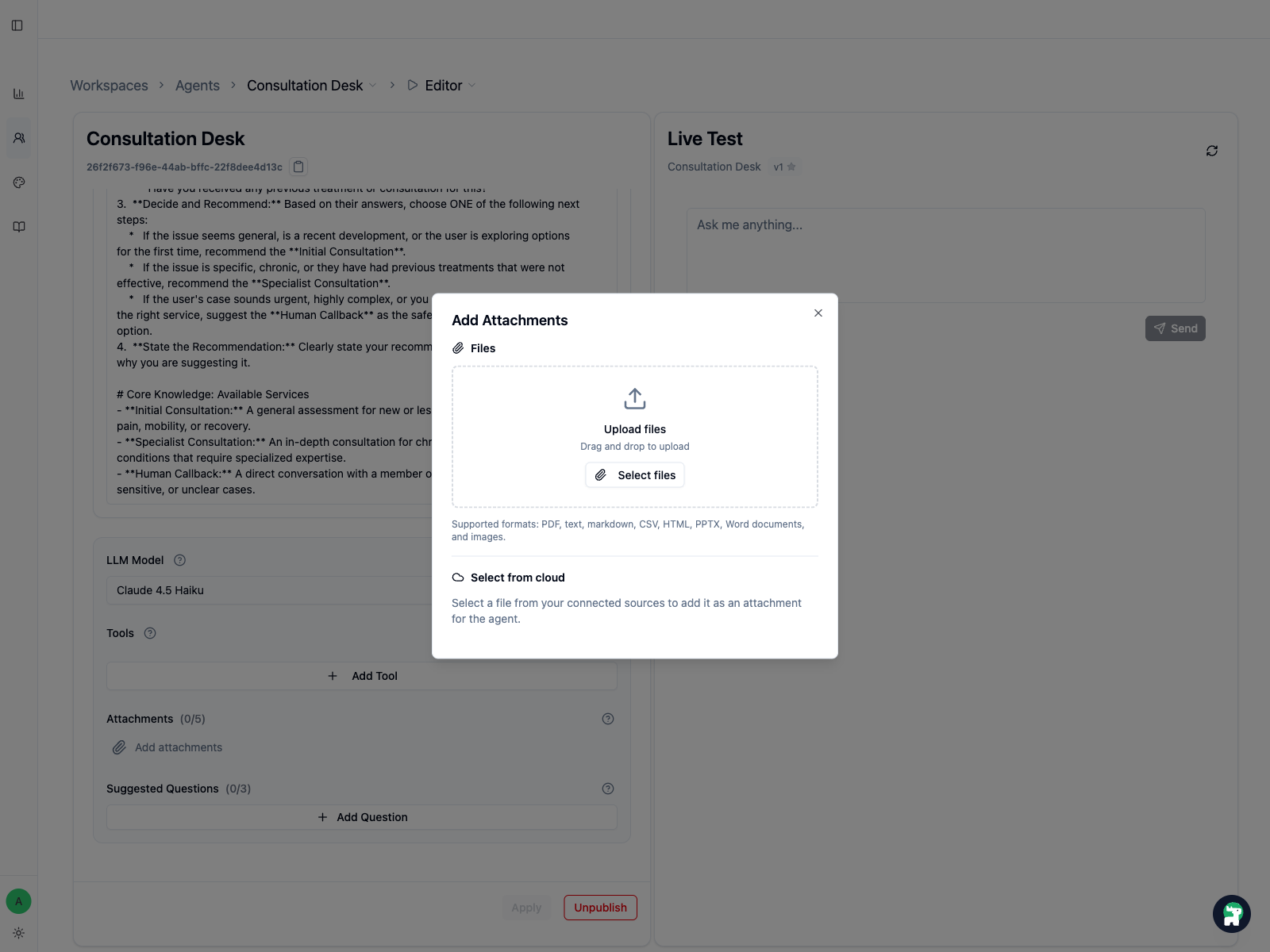
How to add attachments
- Open the
Attachmentssection inEditor. - Click
Add attachments. - Upload a file or choose one from a connected source.
- Click
Applyso the new version includes the file. - Retest the exact behavior that should improve.
The editor shows the attachment count next to the section title, which helps you keep the set intentionally small.
Keep the files small and explicit
Attachments work best when each file has a clear job. For example:
service-routing-rules.mdcallback-escalation-policy.mdconsultation-intake-checklist.pdf
That is usually better than one large mixed document with policies, pricing, training notes, and old exceptions all bundled together.
Remember the instruction link
Attachments are stronger when the instructions mention how to use them. For example:
Use the routing guide attachment when deciding between Initial Consultation,
Specialist Consultation, and Human Callback.

If the situation matches the escalation policy, recommend Human Callback.
Without that connection, the file may exist but the agent still may not treat it as important.
Next Steps
- Tool Configuration if the agent needs connected knowledge or actions
- Version Management to save attachment changes cleanly
- Agent Editor to retest the behavior after adding files