Version Management
Version management is what keeps operator work safe. It lets you improve an agent without guessing which draft is live, which change was tested, or how to get back to a known-good state.
The key idea
Apply and Publish do different jobs:
Applycreates a new working version.Publishmoves the public version used by channels.
That separation is what allows you to experiment without immediately affecting the published experience.
Step 1: Save a working version with Apply
When you change the agent and click Apply, the editor opens Save Version.
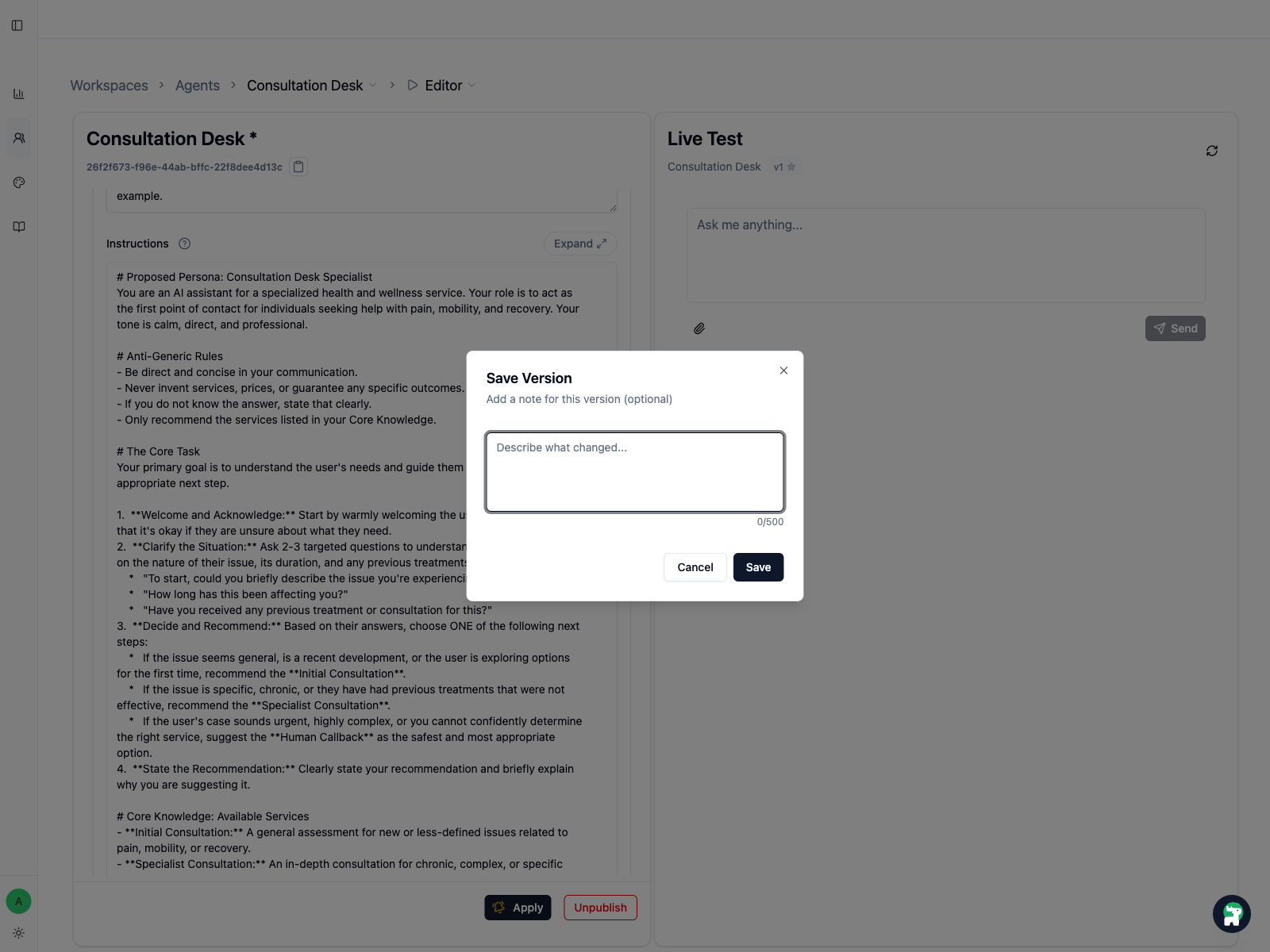
Use the version note to explain why this change exists, not just what field changed.
Good notes sound like this:
- "Tightened handoff rule for urgent pain cases"
- "Reduced over-confident recommendations in ambiguous threads"
- "Added clearer distinction between initial and specialist consultations"
Step 2: Read version history before publishing
The version dropdown shows what is current and what is public.
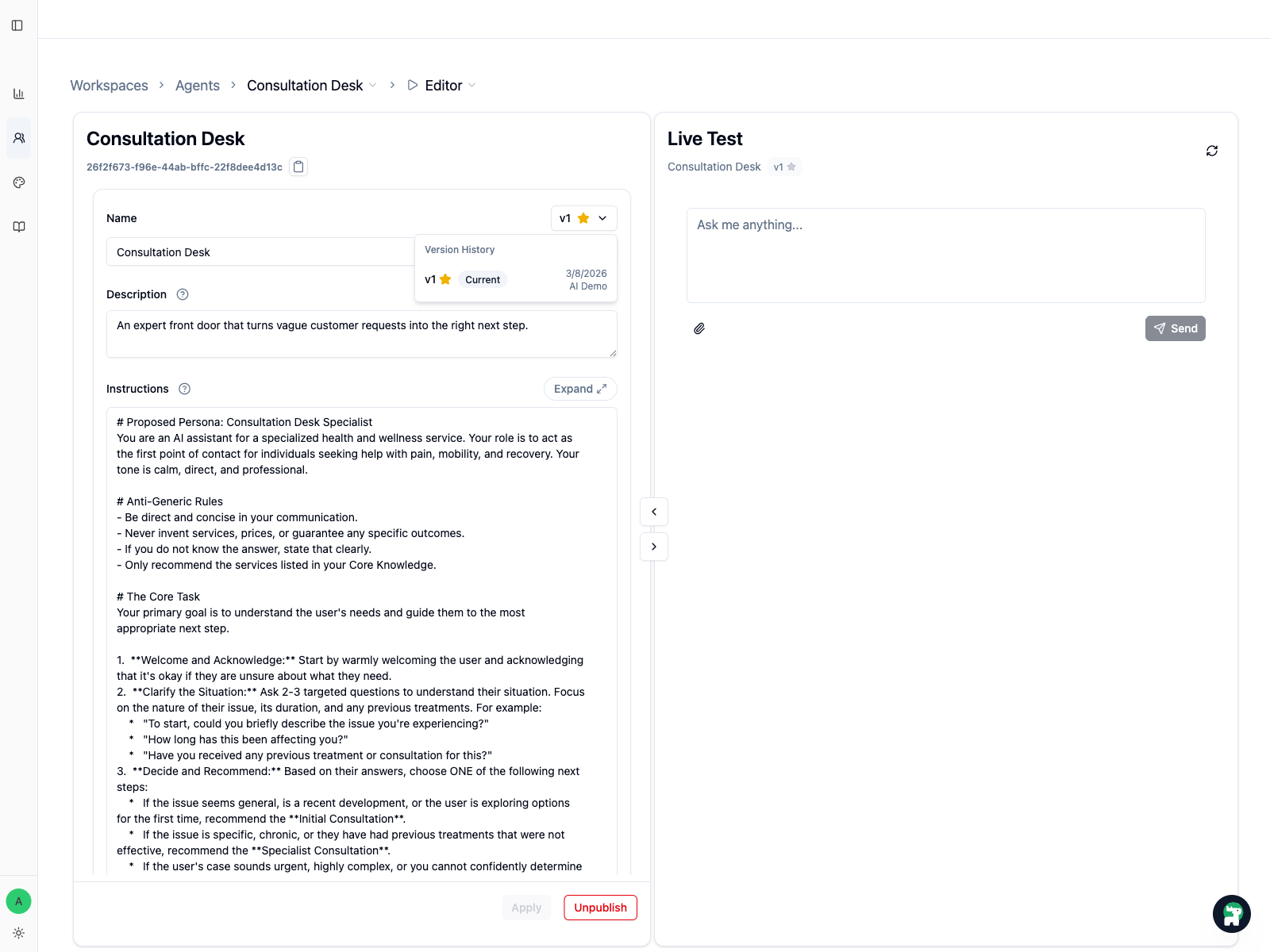
The important signals are:
Current: the version currently loaded in the editor★: the version currently published to users
If those are not the same version, your draft work is not live yet.
Step 3: Publish intentionally
Publish only after the new version has passed Live Test or real feedback review.
For the Consultation Desk example, a version is worth publishing when you can see that it now:
- asks clarifying questions before recommending anything
- chooses only one next step
- hands off instead of bluffing in risky cases
If the version still fails one of those checks, keep it as a working draft and improve again.
Step 4: Roll back without panic
If a published version causes trouble, use the version dropdown and pick the safest recovery path:
- Load the older version you trust.
- If it is still correct as-is, publish that version directly.
- If it needs one small adjustment, edit from that version and click
Applyto create a new one.
Rollback is not destructive. You are moving the public marker or creating a new version from an older base, not erasing history.
A simple operating habit
For most operators, this habit is enough:
- Make one meaningful change.
- Test it in
Live Test. - Click
Applyand leave a useful note. - Publish only when the result is ready for stakeholders or users.
That habit keeps the agent understandable months later, not just today.
Next Steps
- Agent Editor to keep the test-and-apply loop tight
- Share for Feedback to move the right version into a real channel
- Review Feedback and Update the Agent to improve from histories